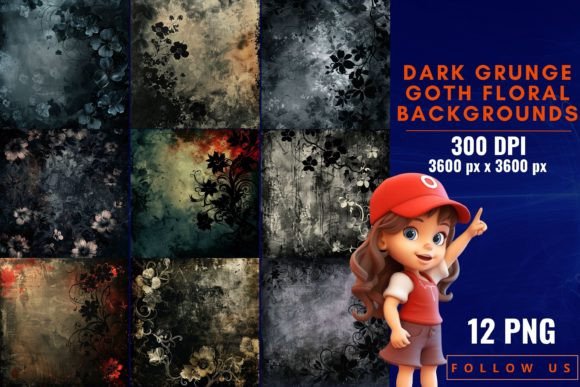
Embracing the Shadows: The Power of Dark Grunge Goth Floral Backgrounds
Visual Characteristics and the Allure of Decay
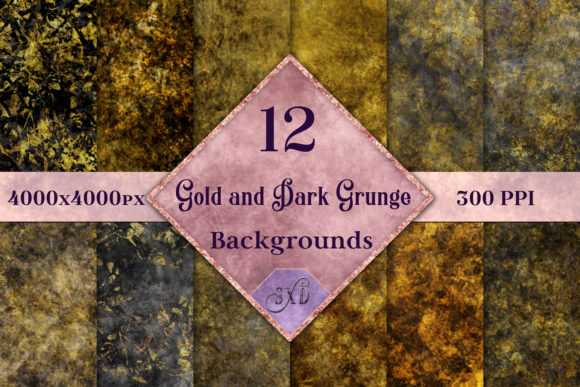
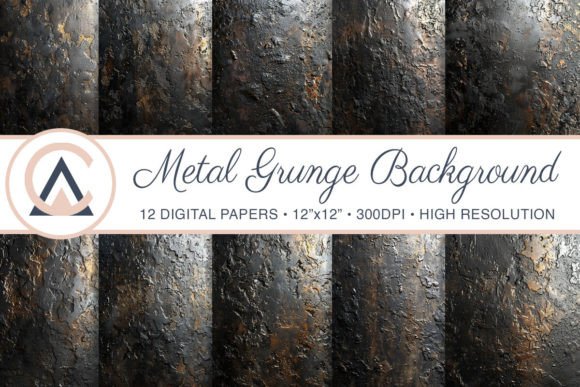
At first glance, the term "floral" might conjure images of bright, cheerful summer gardens. However, the aesthetic of Dark Grunge Goth Floral Backgrounds operates on a completely different frequency. This visual style is defined by a deliberate collision of natural beauty and industrial decay. You are looking at textures that mimic peeling paint, rusted metal, or concrete overlays merged with botanical elements. The flowers featured in these designs are rarely pristine; they are often wilted, skeletal, or shrouded in shadow, creating a sense of memento mori—a reminder of the transient nature of life.
The personality of these backgrounds is moody, atmospheric, and deeply sophisticated. It rejects the "clean and minimal" trend in favor of something raw and textured. The visual hierarchy relies heavily on high contrast—think deep blacks, charcoals, and muted purples juxtaposed against the faint veins of a decaying petal or the sharp edge of a thorn. This isn't just darkness for the sake of darkness; it is a curated exploration of texture. The "grunge" aspect adds a tactile quality that makes digital assets feel grounded and real, while the "gothic" elements provide a narrative structure rooted in history, romance, and mystery.
Strategic Applications for Brand Identity and Marketing
Understanding where to deploy Dark Grunge Goth Floral Backgrounds is essential for effective brand strategy. These assets are not universally applicable, but in the right context, they are incredibly powerful. They are the perfect visual language for brands that want to convey an identity of rebellion, luxury, or alternative elegance. Think of a high-end tattoo parlor, a bespoke perfumery specializing in smoky scents, or a boutique clothing line dealing in vintage velvet. In these cases, the background does more than fill space; it reinforces the brand’s core values.
For content creators and marketers, these backgrounds offer a distinct advantage in the realm of social media graphics. In a feed dominated by bright, over-saturated images, a dark, textured background acts as a thumb-stopper. It provides a high-contrast canvas that makes white or metallic typography pop with exceptional clarity. This is particularly useful for Instagram stories, Pinterest pins, or event flyers for music festivals and art exhibitions. The aesthetic also works exceptionally well in packaging design for products like candles, artisanal spirits, or dark chocolate, where the packaging needs to promise a sensory experience before the product is even opened.
Enhancing Readability and Visual Hierarchy
One of the most practical concerns when using textured backgrounds is readability. Dark Grunge Goth Floral Backgrounds, when used correctly, can actually enhance visual hierarchy rather than hinder it. The key lies in the density of the texture. A well-designed asset in this category will usually feature a "quiet area"—a zone with slightly less visual noise—where text can be placed. When pairing these backgrounds with typography, you must consider the weight of your typeface. A bold, geometric sans serif font often cuts through the grunge effectively, offering a modern contrast. Conversely, a delicate serif font might get lost in the texture unless it is scaled up significantly.
The psychological impact on the audience is also worth noting. This visual style signals that the content is serious, artistic, or exclusive. It moves the viewer away from the "corporate" feel of standard stock photography and into a more intimate, curated space. For a small business owner or entrepreneur, using these assets signals a commitment to aesthetic quality and a willingness to stand out from the mainstream. It tells the audience that you value the "vibe" and the atmosphere, which is a crucial component of modern brand loyalty.
Practical Guidance for Designers and Creators
When integrating these assets into your workflow, think of them as a foundation rather than an afterthought. If you are working on a logo design or a hero image for a website, the background should influence the color palette of the entire project. Pull your accent colors directly from the subtle hues found within the floral elements—perhaps a dusty rose or a deep burgundy—to create a cohesive color theory.
For those involved in editorial design or publishing, these backgrounds can be transformative for chapter headers or pull quotes. They break up the monotony of long-form text and provide a visual resting point that aligns with the mood of the content. However, be mindful of the scale. Zooming in on a specific section of the background to reveal just a texture, rather than the full flower, can create a versatile design asset that works across multiple pages without becoming repetitive.
Finally, always consider the technical specifications. High-resolution files are non-negotiable here; the beauty of the "grunge" style lies in the fine details of the cracks and the grain. If the resolution is too low, the texture will look muddy rather than artistic. Ensure that the assets you choose are versatile enough to be cropped or tiled if you are working on larger print formats or web banners. By treating these backgrounds as a strategic design asset rather than just decoration, you can elevate a standard project into a piece of dark, elegant art.