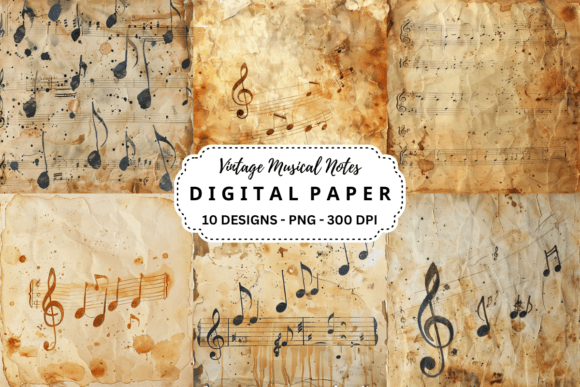
Unleash Timeless Charm with Vintage Musical Notes Backgrounds
There’s a distinct feeling that comes with the visual of aged sheet music. It’s a blend of nostalgia, elegance, and artistic history. For designers and creatives, capturing that specific aesthetic used to mean hours of searching for the right texture or spending time aging new designs. The challenge has always been finding high-quality assets that feel authentic, not just filtered. This is where having a dedicated resource of Vintage Musical Notes Backgrounds changes the workflow for many professionals.
This particular set of design assets offers a solution that’s both practical and visually rich. You receive 10 individual PNG files, each rendered at a professional 300 DPI. The resolution is substantial—3600 x 3600 pixels—giving you the flexibility to scale and crop for a vast array of projects without losing clarity. The visual character is one of authentic antiquity; think yellowed parchment, slightly faded staves, and notes that look hand-engraved or printed with vintage type. The overall appeal is sophisticated, artistic, and deeply nostalgic, perfect for projects that need a touch of historical romance or classic artistry.
Where These Backgrounds Truly Shine
The applications for such a versatile design resource extend far beyond simple decoration. In editorial design, these backgrounds can become the foundation for a magazine feature on classical music, a book cover for historical fiction, or the inside pages of a poetry collection. The texture adds a layer of depth and story that a flat color or modern digital pattern simply cannot match.
For those in branding and marketing, the use cases are equally compelling. A boutique music school, a vintage record store, or a high-end cocktail bar could use these backgrounds to craft a cohesive brand identity. Imagine a business card where the logo design sits atop a subtle, cropped section of a musical score. It immediately communicates a specific vibe and values. In social media graphics, these backgrounds can make posts for a musician, an orchestra, or a lifestyle brand feel more curated and premium. They work beautifully for Instagram story templates, Facebook cover photos, or Pinterest pins that need to stop the scroll.
The realm of physical products and print on demand design projects is where the high resolution truly pays off. Use them as the base for wrapping paper, creating a gift that feels special before it’s even opened. They are ideal for invitations card design—think wedding invitations for a couple who met in a jazz club, or gala invites for a symphony fundraiser. For crafters and hobbyists, these PNGs are perfect for scrapbooking digital layouts or for creating custom printing labels for homemade goods, adding a artisanal, handcrafted feel.
Making Strategic Design Choices
Introducing a strong textured background like this into a project requires a thoughtful approach to visual hierarchy and readability. The key is to treat the background as a supporting actor, not the lead. It provides atmosphere and context, but the message—the text, the logo, the call to action—must remain the star.
When pairing fonts with these vintage backgrounds, contrast is your friend. A clean, modern sans serif font can create a striking and contemporary juxtaposition, making the overall design feel fresh rather than dated. Alternatively, a sophisticated serif font can lean into the classic aesthetic for a more harmonious, traditional look. For a more personal or artistic touch, a well-chosen script font or handwritten font can work, but it must be highly legible at the intended size. Always test your chosen typeface against the background at the final output size. Ensure there’s enough contrast in color and that the intricate details of the music notes don’t compete with the letterforms.
Evaluate the project fit by asking: Does this background support the story I’m telling? For a tech startup’s pitch deck, it would be distracting. For a podcast about music history, it’s perfect. The personality of these backgrounds is inherently artistic, nostalgic, and cultured. They lend an air of professionalism and consistency when used correctly, building brand recognition through a unique and memorable aesthetic.
Practical Tips for Integration and Licensing
Before you dive in, take a moment to review the files. With ten distinct options, you have variety. Some may be denser with notes, others more sparse. Some might have a warmer, more yellowed tone, while others could appear more like crisp, black ink on white. Choosing the right one depends on your color palette and the mood you’re aiming for. A darker, more subdued background might suit a moody brand, while a brighter, higher-contrast one could work for a cheerful invitation.
From a technical standpoint, these PNG files with transparent or solid backgrounds (depending on the specific asset) are ready for most design software. You can layer them in Adobe Photoshop, place them in Illustrator, or use them in Canva for quicker projects. Their high DPI means they are suitable for print, but always do a small test print to check how the texture reproduces, especially for packaging design or poster & banner design.
Finally, a crucial step for any commercial project: understand the licensing. The provided asset is a commercial font—or more accurately, a commercial design asset. This typically means you can use it in projects for clients and for sale, but you cannot redistribute the original files themselves. Confirm the specific terms to ensure your use, whether for a client’s logo design, a line of merchandise, or digital products, is fully covered. This due diligence protects your work and your business.
In the end, a resource like these Vintage Musical Notes Backgrounds is more than just a decorative element. It’s a versatile tool for storytelling, a shortcut to creating depth and emotion, and a way to inject a timeless, artistic soul into modern digital and print projects. Used with intention, it can elevate your work from simply informative to truly evocative.