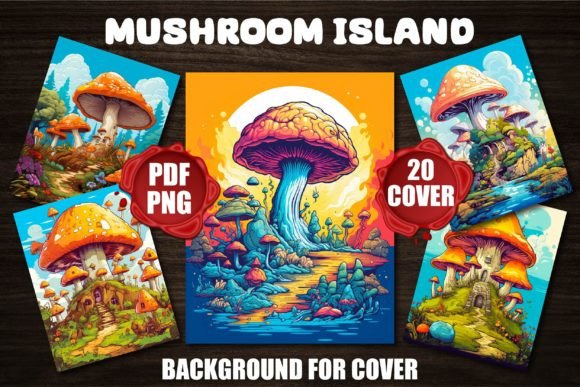
Mushroom Island Backgrounds: Whimsical Cover Art
In the realm of digital design and print-on-demand publishing, the visual hook is everything. We are constantly looking for assets that bridge the gap between professional polish and whimsical charm. Enter the Mushroom Island Backgrounds for Covers. This collection is not merely a set of images; it is a curated library of atmospheric art designed to transport the viewer instantly. As a designer or publisher, you know that the cover is the first conversation a product has with a customer. These backgrounds provide that "stop the scroll" factor with a distinct blend of fantasy and intricate detail.
Visual Style and Aesthetic Appeal
When we analyze the visual language of the Mushroom Island Backgrounds for Covers, we are looking at a specific niche of illustration that balances complexity with readability. These aren't generic textures. They feature organic shapes, mycological details, and a sense of depth that suggests a fully realized world. The aesthetic leans heavily into the "cottagecore" and "fantasy" trends that dominate current marketplaces like Amazon KDP and Etsy.
For the creative professional, this style solves a common problem: how to create an immersive experience without commissioning expensive custom artwork. The intricate designs serve as a perfect canvas for overlaying text. Whether you are working on an adult coloring book, a fantasy novel, or a wellness journal, the visual personality of these backgrounds communicates safety, magic, and imagination. The artwork typically features soft edges and detailed linework that mimics high-end vector illustration, making it versatile for both digital print and screen-based applications.
Strategic Applications for Publishers and Designers
Understanding where these assets fit into your workflow is key to maximizing their value. The Mushroom Island Backgrounds for Covers are not limited to just coloring books, though that is a primary use case. As a brand strategist, I see immediate applications across several verticals.
First, consider the KDP Interior and cover market. The demand for therapeutic coloring and stress relief content remains high. These backgrounds provide the exact visual density required for adult coloring books. However, don't overlook the packaging potential. If you are selling physical goods—perhaps artisanal teas, handmade soaps, or stationery—these backgrounds offer a premium, earthy feel that elevates packaging design. The 300 DPI resolution ensures that the texture remains crisp on physical labels and boxes.
Furthermore, for content creators and bloggers, these images are gold for social media graphics. A busy Instagram feed requires distinct visual language. Using these backgrounds for story highlights or quote cards creates a cohesive, magical brand identity that audiences remember. They also work beautifully as backgrounds for podcast artwork or YouTube thumbnails where you want to evoke a sense of storytelling.
Design Mechanics: Hierarchy, Pairing, and Readability
Using a detailed background effectively requires a solid grasp of visual hierarchy. The strength of the Mushroom Island Backgrounds for Covers lies in their detail, but that detail can compete with text if not handled correctly. When overlaying your title or logo, contrast is your best friend. You will likely need to utilize semi-transparent overlays or drop shadows to ensure your typography pops.
Speaking of typography, the choice of typeface is critical here. Because the backgrounds are organic and illustrative, they pair best with fonts that have character. A rigid, geometric sans serif font might feel too clinical. Instead, consider a handwritten font or a script font for the main title to complement the whimsical nature of the island. For subtitles or body text, a clean serif font with high legibility works well to ground the design. This font pairing strategy ensures the cover looks professional rather than chaotic.
When testing these assets, pay attention to the "negative space" within the illustration. Even the most detailed activity coloring pages have areas of lower density. Position your text in these areas to maintain readability. This approach respects the artistry of the background while fulfilling the functional requirement of the cover—to be read and understood quickly.
Technical Workflow and Asset Management
From a production standpoint, the utility of these assets is enhanced by their format. Being provided as high-quality PNG files with transparent or isolated elements (depending on the specific file structure) allows for seamless integration into graphic design software like Photoshop, Illustrator, or Canva.
For those managing a large volume of projects, treating these as part of a massive bundle design strategy is wise. Instead of using one background for one project, think about how you can crop, recolor, or overlay these images to create multiple variations. A single background can become a full digital paper pack or a series of fun coloring pages with minor adjustments. This modular approach to design assets saves time and ensures visual consistency across a product line.
Always ensure you review the licensing for commercial use. Since these are intended for products like Amazon Kindle Direct Publishing covers, the license should cover the sale of the final product. However, standard etiquette in the digital print world dictates that you cannot resell the raw source files. Your value-add comes from the context you build around the image—the layout, the typography, and the overall editorial design.
Final Thoughts on Creative Potential
The Mushroom Island Backgrounds for Covers represent more than just "pretty pictures." They are a gateway to creating immersive products. In a market saturated with generic stock photography, these illustrations offer a hand-crafted feel that resonates with audiences seeking mindfulness and relaxation.
Whether you are a hobbyist creating a gift for a friend or a small business owner launching a new line of journals, these assets provide the visual foundation you need. They remind us that good design is about evoking emotion. By leveraging the whimsical, detailed nature of these backgrounds, you create an immediate emotional connection with your user, inviting them to step into the world you’ve built. That is the true power of effective graphic design.