Wooden Peeling Paint Backgrounds for Rustic Craft Projects
In the world of design, texture speaks louder than words. When you are building a brand identity or crafting a physical product, the background isn't just empty space; it is the foundation of the story you are telling. We often spend hours agonizing over the perfect serif font or a modern sans serif font for our typography, yet we forget that the canvas holding those letters needs just as much personality. This is where the raw, authentic look of weathered wood comes into play. It provides an immediate sense of history and durability that sleek, digital gradients simply cannot replicate.
For designers, small business owners, and hobbyists alike, finding high-quality assets that don't look like they were pulled from a 1990s clip-art site can be a challenge. You need something that feels tactile. You want a surface that looks like it has been sitting in a vintage workshop, with layers of old paint cracking and fading to reveal the grain underneath. This specific aesthetic—the mix of industrial decay and natural warmth—is incredibly versatile. It allows bright typography to pop while giving the overall composition a grounded, trustworthy feel.
The Unique Appeal of AI-Generated Textures
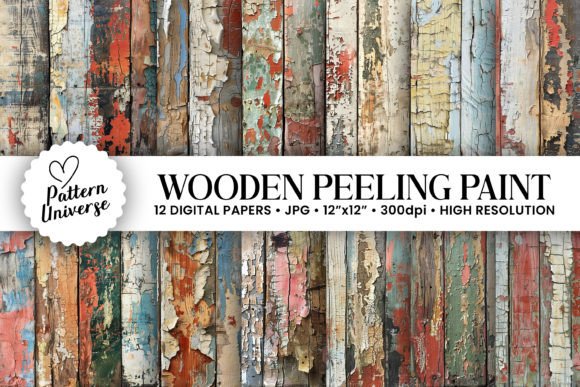
The collection of Wooden Peeling Paint Backgrounds we are looking at today brings a modern twist to this classic aesthetic through the use of AI generation. This is a significant development for content creators. Traditionally, sourcing these textures meant spending hours photographing old barns or trying to manipulate stock photos to remove shadows. AI-generated digital papers allow for a consistency and resolution that is often hard to achieve with a camera. These aren't just random images; they are designed to be seamless assets that serve a specific purpose in your workflow.
What makes this specific set stand out is the attention to detail in the "peeling" aspect. It captures the frayed edges where blue, white, or red paint has cracked away to reveal the dark wood grain beneath. This creates a beautiful contrast that works exceptionally well for overlaying text. Whether you are using a bold display font for a logo design or a delicate script font for wedding invitations, the background provides enough texture to be interesting without overwhelming the message. It strikes a balance between rugged and refined, making it a premium font companion for your visual hierarchy.
Practical Applications for Designers and Crafters
Understanding where to use these backgrounds is key to maximizing their value. The files included in this pack are sized at 3600 x 3600 pixels (12" x 12") at 300dpi. If you are a print designer or a scrapbooker, you recognize immediately that this is the gold standard for high-resolution printing. You can print these at full bleed on cardstock without seeing a single pixel, making them perfect for tangible products.
Here is how different professionals can integrate these assets into their projects:
- Greeting Cards and Invitations: If you are designing for a rustic wedding or a vintage-themed birthday party, these textures are ideal. They replace flat cardstock backgrounds, adding a tactile feel that invites the recipient to touch the paper. Pairing this with a handwritten font for the headlines creates a cozy, personal vibe.
- Packaging and Product Design: For small business owners selling homemade goods like candles, jams, or soaps, packaging is everything. Using a peeling paint texture on your labels or tumbler wraps signals that the product inside is handcrafted and authentic. It bridges the gap between the digital design and the physical product.
- Digital Marketing and Social Media: In the fast-scrolling world of Instagram or Pinterest, texture stops the thumb. A social media graphic featuring a weathered wood background feels more substantial than a flat color block. It works particularly well for quotes, testimonials, or sale announcements where you want the text to feel "stamped" onto the surface.
- Scrapbooking and Digital Collage: The 12x12 format is specifically tailored for digital scrapbooking. These backgrounds serve as a unifying element for photos and ephemera, helping to organize busy layouts while maintaining a cohesive artistic theme.
Integrating Texture with Typography and Brand Identity
One of the most common mistakes in graphic design is treating the background and the typography as separate entities. They must work in concert. When using a distressed background like Wooden Peeling Paint Backgrounds, your choice of typeface becomes critical. Because the background has a lot of "noise" and texture, you generally want to avoid overly thin or complex fonts that might get lost in the grain.
Instead, consider these pairing strategies to ensure readability and visual hierarchy:
- Bold Sans Serif Fonts: A heavy, geometric sans serif font works beautifully against the irregular lines of peeling paint. The clean, mathematical precision of the letters contrasts with the organic chaos of the wood, making the text highly legible and impactful. This is great for headlines and logos.
- Chunky Serif Fonts: For a more vintage or editorial look, a slab serif font reinforces the "old world" feel. It suggests permanence and tradition. This combination is excellent for publishing layouts or book covers that deal with history or nature.
- Simple Script Fonts: If you need to convey elegance or a personal touch, a clean script font can work, provided it has a thick stroke. Thin calligraphy might disappear. A thicker script mimics the look of paint brushed over wood, creating a cohesive narrative between the text and the background.
Technical Specifications and File Management
For the working professional, the technical specs of a design asset are just as important as the visual appeal. This bundle includes 12 digital papers within a single zip file. Having a variety of options—perhaps different angles of wood grain or different colors of peeling paint—ensures that you aren't using the exact same background for every project, which can make your portfolio look repetitive.
The 300dpi resolution is non-negotiable for print work. Whether you are designing a flyer, a business card, or a large-scale poster, this resolution ensures crisp edges and smooth gradients. The 3600x3600 pixel dimension also offers flexibility. You can crop into the center for a close-up of the texture for a phone case design, or use the full square for a scrapbook page. This versatility makes it a valuable addition to any designer's library of creative assets.
Furthermore, when working with clients, consistency is key. Having a set of 12 matching textures allows you to create a series of materials—perhaps a set of thank you cards, a matching menu, and social media posts—that all share the same visual DNA. This strengthens the client's brand identity and makes your work look more professional and strategic.
Final Thoughts on Versatility and Value
Ultimately, the goal of any design asset is to save you time while elevating the quality of your work. Searching for the right stock photo, editing out unwanted elements, and color-correcting to match your brand palette can take hours. A curated set of Wooden Peeling Paint Backgrounds removes that friction. It provides a ready-to-use canvas that works across a multitude of mediums, from digital web design to physical print production.
Whether you are a hobbyist making cards for friends or a marketing professional building a campaign for a client, the rustic charm of peeling paint on wood is a timeless motif. It connects with viewers on an emotional level, evoking feelings of nostalgia, comfort, and authenticity. By incorporating these high-resolution backgrounds into your toolkit, you are equipping yourself to create designs that don't just look good, but feel real.